
TL;DR
- The thesis: in luxury, AI creates value when it stays in the kitchen — invisible to the client, anchored in operations. It destroys value the moment it enters the dining room.
- Kering officially launches ReconKering in Florence: RESET 2026, REBUILD 2028, RECLAIM 2030. Group-wide agentic AI platform, nine entities, Pierre Houlès (ex-Renault) leading digital, Gucci × Google confirmed for 2027. Stock down 6% post-announcement.
- Inverto / BCG: indirect procurement accounts for up to 50% of maisons' external spending. +5 margin points recoverable in 18 months via agentic AI, "without impacting luxury value."
- Watches & Wonders Geneva: 60 maisons, zero mention of AI in product presentations. 13 tech startups deliberately sequestered in a LAB separated from the main exhibition space.
- EU AI Act Article 50: enforceable August 2, 2026. Mandatory disclosure, penalties up to €15M or 3% of global revenue. Complete silence from maisons on their readiness.
- Jasper 2026 (American AI marketing software publisher, annual study of 1,400 professionals): 91% AI adoption in marketing teams, but only 41% can prove ROI (return on investment, vs. 49% in 2025). Governance has become the number-one blocker, ×3.4 in one year.
PARADOX OF THE WEEK
"The more AI does, the less it shows."
Jasper just measured 91% AI adoption in marketing teams in 2026, up from 63% last year. 95% of teams are increasing their AI budgets. 66% plan to allocate more than 10% of their marketing budget to AI. And yet not one of the sixty maisons at Watches & Wonders mentioned AI in a single product presentation. No official communication from Gucci, Prada, Valentino, Balenciaga, Chanel, or Hermès on their readiness for EU AI Act Article 50, enforceable in under a hundred days. The gap between what is being done and what is being said has never been wider.
December 2025. Valentino launches an AI video for the DeVain bag, labeled "AI" with deliberate transparency. Result: hammered in the comments. The Getty Images transparency report (Dr. Rebecca Swift, SVP Creative) delivers the clinical diagnosis: nearly nine in ten consumers want transparency about AI-generated images, and most judge AI content as less valuable than human-made content — even when disclosure is total. Transparency doesn't offset symbolic depreciation. It makes it visible.
Governance has become the number-one blocker in marketing teams, ×3.4 vs. 2025. Not competence. Visibility. The paradox of the week is also its operational rule: in luxury, adoption is massive and communication is nonexistent. Both statements are true simultaneously. The industry has found its modus operandi: it doesn't talk about it.
Sources: Jasper, State of AI in Marketing 2026 (1,400 marketers, January 2026); CompleteAITraining.com, Valentino DeVain backlash, December 2025.
WHAT'S MOVING
Watches & Wonders Geneva: 60 maisons, one tech annex
Watches & Wonders Geneva 2026 (April 14–20, Palexpo), 60 exhibiting maisons, 11 new entries this year, Audemars Piguet returning after five years' absence. TAG Heuer unveils the Monaco Evergraph (5 years of R&D, TH80-00 caliber, carbon hairspring, 5 Hz). Patek Philippe presents several Grandes Complications, including the Ref. 6105G-001 "Celestial" (47mm white gold, 6 patents). Bvlgari, the Octo Finissimo 37. Across all product communications: zero mention of AI. Inside the fair, deliberately set apart from the main exhibition space, the LAB 2026 brings together 13 projects selected by a committee of specialists from the exhibiting maisons: Watchibia (Bern, biometric smart straps), Nanodia (Paris, nanolithography on dials). AI and tech exist at Watches & Wonders. They're in the annex.
Sources: Financial Times, April 13, 2026; LVMH.com, April 17; TAG Heuer W&W official; Audemars Piguet W&W official; Hodinkee, April 12.
Inverto / BCG: the invisible margin levers
Interview in Journal du Luxe, April 14–15, 2026. Isabelle Pinto Carradine, Managing Director of Inverto (BCG's procurement arm, Cologne), delivers a quantified diagnosis. The "invisible levers" of maisons — indirect procurement, marketing and media, logistics, IT, G&A, store fit-outs — can account for "up to 50% of external spending," historically "poorly structured and undermanaged." Agentic AI applied to this perimeter can unlock "more than five margin points over an 18-month period, without impacting luxury value." Her formulation cuts through the usual consulting register: "The challenge isn't to 'spend less' but to spend better — aligning every euro committed with what truly creates value for the client." That is the complementary read that Kering's April 16 press release does not provide.
Sources: Journal du Luxe, full interview with Isabelle Pinto Carradine, April 14–15, 2026.
Jasper 2026 + EU AI Act: two clocks running
Two parallel data points. On one side, Jasper State of AI in Marketing 2026 (1,400 marketers, January 2026): 91% adoption (vs. 63% in 2025), 95% of teams increasing their AI budgets, but only 41% able to demonstrate ROI (vs. 49% in 2025). Governance has become the number-one blocker, ×3.4 in twelve months. On the other, EU AI Act Article 50 enters into force on August 2, 2026. Requirements: clear disclosure on all AI-generated content (not in fine print), machine-readable metadata (C2PA recommended — the cryptographic content provenance standard co-founded by Adobe, Microsoft, and the BBC), a visible indicator at first interaction. The second draft of the Code of Practice will be finalized in June 2026. Penalties: up to €15M or 3% of global revenue. To date, not a single luxury maison (Gucci, Saint Laurent, Balenciaga, Prada, Chanel) has made any public statement about its readiness. One hundred days.
Sources: Jasper, State of AI in Marketing 2026, January 2026; EU AI Act Article 50, official text; DiscloseKit.
DEEP DIVE: The Semiotic Tax, watchmaking edition
Palexpo, April 15. In the main hall of the Watches & Wonders fair, a visitor is looking at a Patek Philippe Grande Complication. She takes out her iPhone. Not to scan a QR code — to photograph the piece. The maison isn't selling a watch: it's selling the possibility of taking that photo. Twelve meters away, the LAB 2026 presents thirteen horological tech projects. It's the same exhibition. It is not the same room.
That architectural detail says everything.
An unwritten rule
Luxury doesn't sell an object. It sells the signal that the object is exceptional: rare, human, not reproducible at scale. Any AI made visible in a luxury communication levies a tax on that signal. It indicates that the exceptional was produced algorithmically, and it depreciates the maison's core promise. The higher the maison positions itself on rarity and the human gesture, the higher the tax.
The Semiotic Tax
Semiotics studies signs and what they signal — here, the "human rarity" signal that every luxury maison sells before it sells the object itself. Any AI made visible in a luxury communication levies a tax on that signal. The higher the maison positions itself on rarity and the gesture, the higher the tax. The operational rule that follows: adopt massively, never communicate.
I see four converging proofs over eighteen months:
Proof 1. Valentino, December 2025
Documented in the Paradox of the Week. The lesson: disclosure doesn't save perceived value — it makes the depreciation visible. When the maison flags AI, the client adjusts the symbolic price downward, even when the image is technically flawless.
Proof 2. Balenciaga × Intelo.ai, January 2026
A dedicated network of AI agents for merchandising and retail planning, announced without fanfare, scaling confirmed across the entirety of Kering in the CMD (Capital Markets Day, the group's annual strategic investor day) press release. No Balenciaga client will ever see a trace of it on a garment. The AI is in the back office. It works because it doesn't appear.
Proof 3. Watches & Wonders 2026
Details in WHAT'S MOVING. What deserves noting here: the geography of the fair — products in the main hall, tech in the annex — is the exact physical replica of the unwritten rule. The organization imposed nothing. The maisons spontaneously produced that separation.
Proof 4. Franck Le Moal, CIO of LVMH, June 2025
"We need something more discreet than big data. We call it 'quiet tech,' like our version of 'quiet luxury.' [...] Like fine tailoring, we want our IT to be almost invisible, serving our products and brands to the delight of our customers." Franck Le Moal, Chief Information Officer, LVMH — Google Cloud, June 10, 2025
Four signals, two rival groups, one sectoral consensus. The Semiotic Tax isn't an editorial intuition: it's the unwritten rule of agentic luxury.
Why now
The convergence isn't accidental. It rests on three facts that crystallized between late 2025 and April 2026. First, technical maturity: generative models have crossed a quality threshold that makes them genuinely usable in campaigns — and therefore tempting. Second, the Valentino effect: a public case prominent enough to serve as an internal counter-example in every competing marketing department. Third, regulatory pressure: the EU AI Act forces a binary decision (disclose or don't use), and most maisons would rather not use than display. The aggregate result is a ratchet effect. Luxury has chosen silence, and that choice will only harden.
What this changes in practice
For a maison's marketing director or CIO, the question is no longer "should we adopt agentic AI?" The answer is yes — adoption is in the rearview mirror. The question is: where to place it so it creates value without destroying any? Three low-tax zones: indirect procurement, retail planning, inventory management. Three high-tax zones: visual campaigns, art direction, human customer service. Between the two, a shifting line that depends on the maison's position on the rarity scale: Gucci can show more than Patek Philippe; Hermès can show nothing at all.
A maison that publishes an EU AI Act-compliant disclosure in August 2026 for a Gucci spot takes a semiotic risk. A maison that publishes nothing takes a legal risk (€15M or 3% of global revenue). Both risks are real. Executives must make that call before the regulatory calendar forces their hand, not after. One hundred days.
The lesson of the week is in the architecture of the Geneva fair. The mechanism is inside the case. The AI is in the annex. What creates value doesn't — necessarily — put itself on display.
THE STORY: Kering / De Meo, the leopard's molt
I ran the Renault digital program at Razorfish for two years. I watched De Meo and his teams operate from the inside. Reading the fifty-four pages of the CMD Florence press release, three strata emerge. Two of them are in direct tension. Here is what this week puts on the table for Kering — and for luxury.
What was announced
ReconKering unfolds in three phases: RESET by end-2026, REBUILD by end-2028, RECLAIM by end-2030. The financial ambition is explicit: more than double the recurring operating margin rate relative to 2025 levels (11.1%, vs. 27% at the 2022 peak), achieve a ROCE (return on capital employed) above 20%, maintain a Capex (capital expenditure) of 5–6% of revenue.
The plan is structured around nine strategic entities (not seven, as several outlets reported): six fashion maisons (Gucci, Saint Laurent, Bottega Veneta, Balenciaga, McQueen, Brioni), Kering Jewelry, Kering Eyewear, and Kering Next. This last entity groups Ginori 1735, the beauty partnership with L'Oréal, and a "House of Wonders" platform for emerging brands.
Each entity receives a defined desirability corridor. Gucci: network reduced from roughly 600 to 450 stores (including 130 net closures in China by 2030), leather goods as the priority category, artistic direction affirmed by Demna since July 2025. Saint Laurent: daywear, Asia focus. Bottega Veneta: deep luxury, intrecciato, discretion. Balenciaga: couture and resonance with the younger generation, rebalancing toward women's and leather goods. McQueen: tightened British tailoring. Brioni: Italian alta sartoria, absolute bespoke.
The Group AI platform deploys across five pillars: Technology ("cloud-native infrastructure, agentic AI, next-generation digital twins"), Client ("unified, AI-powered client base to inform decisions from creation to planning"), Industry (HModa joint venture for production), Sustainability, and Support functions. The stock fell 6% on the day of the announcement. Analyst consensus as of April 19: "Reduce" (3 sell, 5 hold, 2 buy).
One final detail, not a minor one. On April 15, the day before the CMD, Kering announced the creation of the Accademia per le Eccellenze, a craft training campus opening in September 2026 in Milan (MIND, Milano Innovation District). 1,000 people trained per year, scaling to 2,000. Curriculum: ready-to-wear, tailoring, leather goods, jewelry — and, explicitly, technology, AI, and new materials. The platform is not only software. It is also human.
The De Meo method
De Meo is not an industrialist. He's a marketer who became a CEO, having moved through Fiat, Seat, and Volkswagen before Renault. His strength is the clarity of desirability corridors. At Renault, the Renaulution had three acts: Resurrection, Renovation, Révolution. Dacia owned the entry-level, Alpine repositioned as premium sport, Renault reclaimed its popular DNA. Each brand in its corridor, each corridor held. The Florence playbook is identical. Nine maisons, nine corridors. ReconKering reprises the grammar: everything changes — org chart, store network, AI platform, training, talent — so that what creates value (the maisons' DNA, rarity, the artistic director's gesture) remains intact. An aristocracy shedding its skin to endure. Not a rupture. A révolution of conservation.
The press release owns it:
"In summary, a model that worked for ten years is no longer effective for us. Growth will come first from winning market share, restoring pricing power, and executing better than our peers." Luca de Meo, CMD Florence, April 16, 2026
"Executing better than our peers." That verb, execute, carries the next stratum.
Pierre Houlès, the agent of change
On March 17, 2026, Kering appointed Pierre Houlès as Chief Digital, AI & IT Officer, Executive Committee member, reporting to COO Jean-Marc Duplaix. His official brief: "Strengthen the Group's digital strategy and accelerate the transformation of its technology architecture to support Kering's operational and technological ambitions."
What makes this appointment singular is the trajectory. Houlès comes directly from Renault Group, where he led digital transformation from 2016 to 2026: ten years as Managing Director of Renault Digital, then Deputy General Manager CIO and Technical Director of Mobilize & Dacia. He is the architect of the data and agentic AI platform that underpinned the Renaulution. He arrives at Kering thirty days before the CMD that unveils a Group agentic AI platform and digital twins. The continuity isn't rhetorical. It's biographical.
The first documented Kering AI project under his watch is Balenciaga × Intelo.ai, a partnership announced January 21, 2026: a network of specialist AI agents for merchandising and retail planning, operating as "digital teammates" to solve stock and allocation problems. The CMD press release confirms this pilot will scale across the entire group. That's the proof of concept. Houlès is the scaling vector.
De Meo + Houlès: the duo that rebuilt Renault, reassembled to rebuild Kering. Same method. Same vocabulary (I heard the words "platform," "digital twins," "agents" in the same sentences in Guyancourt, three years before Florence). Same three-beat rhythm. Luxury is no longer a sector sealed off from automotive industry. It imports its architects.
Gucci × Google: the product that makes it real
On the sidelines of CMD Florence, Luca de Meo confirmed the Gucci × Google smart glasses project to Reuters in five words: "Probably next year, 2027." The technology platform is Android XR (Google's operating system for headsets and extended reality glasses, competing with Apple's visionOS), the same base as Project Aura, Google's first mass-market Android XR glasses expected by late 2026. Kering arrives on the segment one cycle behind the mainstream. Deliberately. That's the logic of luxury.
The vehicle is Kering Eyewear (15 brands, integrated industrial expertise, Q1 2026 revenue at a record €489M). The chosen brand is Gucci, not Boucheron, not Saint Laurent. Gucci concentrates the bulk of the group's current eyewear revenue and carries the desirability rebuild at the heart of the RESET. The CMD press release states it: the Eyewear business "aims to make connected eyewear a genuine luxury experience." Google has not commented publicly at this stage. Price, embedded Gemini capabilities, and the distribution model remain undocumented.
Those blanks are characteristic of agentic luxury. The AI is announced through Gucci's desirability, not Google's technical specs. The tech partner stays in the kitchen. The maison stays in the dining room. The smart eyewear market is projected at $30 billion by 2030 (State of Fashion 2026, sales multiplied by 4 in 2026). The direct competitor is Ray-Ban Meta, designed by EssilorLuxottica for Meta, positioned in the mass market since 2023. Kering positions above, in premium fashion. Not the first on the segment. The most desirable.
The Platform and the Gesture
This is where, in my view, the Renault playbook meets its limit.
At Renault, portfolio clarification was accompanied by aggressive technical mutualization: shared platforms, common powertrains, architecture modules circulating between the Captur and the Mégane. The customer sees the brand, not the chassis. The promise held: no identity loss, margin gains. Renault brought its operating margin from 1% to 8% in five years.
In luxury, mutualization stops at creation. Kering can share infrastructure (the five Group pillars). It cannot share art direction. The platform is common. The gesture must not be.
Henri Focillon, art historian at the Collège de France, wrote in In Praise of Hands (1934):
"The hand is action: it grasps, it creates, and sometimes one might say it thinks." Henri Focillon, In Praise of Hands, 1934
What Focillon names is the tacit memory of the gesture: what passes from creative to creative, from craftsman to craftsman, from atelier to atelier, without ever passing through language. That memory is luxury's raw material. A Bottega bag is not made by machines. It is made by hands that know how to work the intrecciato, and that knowledge is not codifiable in a unified client database. The platform can inform the gesture (this color, this client, this price point). It cannot condition it (the tension of the leather remains a decision of the hand).
The Kering CMD press release acknowledges this: the Group platform is built "while fully preserving their creative identities." But one phrase in the text warrants vigilance. The Client pillar aims to "illuminate decisions upstream, from creation to sales planning and operations." From creation. Three words that reach beyond infrastructure and back into the atelier. Or at the very least back into the maisons' "product" cells (merchandising direction, product marketing…) — in short, the people whose craft and knowledge is to ensure that collections will meet their market. As for the creative studios inside the maisons themselves, I have my doubts.
Demna at Gucci. Anthony Vaccarello at Saint Laurent. Louise Trotter at Bottega Veneta. Three artistic directors, three non-negotiable grammars. They were on stage in Florence. They heard those words. The future will tell whether they received them, and consented.
I am convinced Kering is right to mutualize the platform. The synergies are real, quantifiable, and the only available margin vector that doesn't touch the product. And speaking of product — I remember a time when Ermenegildo Zegna was the manufacturer for Gucci Group on all the tailoring pieces for Gucci, Saint Laurent, and McQueen… The design belonged to each maison, but the make was mutualized and the craft shared. That said, Pierre Houlès is the right vector: he did this for ten years at Renault. But I am equally convinced that the risk is not in the platform's execution. It's in contamination. Every time a mutualization logic touches the creative gesture, identity pays the price. The line must not be crossed. For now, De Meo is holding it. For now.
Execution Capital
If The Platform and the Gesture defines the line that must not be crossed, Execution Capital defines the territory to be won.
It is the new competitive currency of luxury in the age of agentic AI. Brand heritage remains necessary: it's the entry ticket. It no longer suffices to differentiate. The gap between maisons now widens on their operational execution capacity: extracting the 50% of undermanaged indirect procurement, deploying agentic AI platforms faster than the competition, building the unified client base. The Inverto figure (+5 margin points in 18 months, without touching the product) is the first metric of that capital.
Isabelle Pinto Carradine sets the heading, speaking to Eric Briones:
"The challenge isn't to automate the decision, but to give teams the means to decide faster and better in an environment that has become more volatile. The difference won't come from brand power alone, but from execution capacity." Isabelle Pinto Carradine, Managing Director Inverto (BCG), Journal du Luxe, April 14–15, 2026
What ReconKering's Industry pillar calls "the HModa joint venture, mutualized procurement, logistics, quality" is precisely the activation of that capital. The difference between Kering in 2026 and Kering in 2030 will not be decided by the desirability of its maisons alone — Demna, Vaccarello, and Trotter are already working on that. It will be decided by the capacity to extract operational value without touching the gesture. The margin that must double (from 11.1% to above 22%) will come from there.
And that is where the Accademia per le Eccellenze reveals its true purpose. 1,000 people trained per year in Milan, through a curriculum that couples craft with technology. This isn't a PR move: it's the HR translation of Execution Capital. Training both the hands that make the bag and the hands that operate the AI agent that optimizes the bag's supply chain. Both in the same school. The gesture and the platform trained together, by the same people, to work side by side without merging.
De Meo's own diagnosis, delivered at the January 2026 Innovation Day, remains the most honest and brutally accurate formulation I have read to date:
"I come from an industry where up to 10% of revenue goes to R&D. In luxury, we invest around 1%." Luca de Meo, Kering Innovation Day, January 2026
The Bain 2025 sector average is 3.1% of revenue (range 1.9–5.5%). The gap with automotive is a factor of ten. ReconKering, through Houlès and the Group platform, is the operational response to that diagnosis. Execution Capital is the name I give to what De Meo is building behind those five pillars. In silence. In the kitchen.
What the agent proposes, and what the maison keeps
Marcel Mauss published The Gift in 1925. In it, he shows that in the societies he studied, the most structuring form of exchange is not commerce but gift-giving: a received object creates an obligation to give back, and it is that cycle which weaves community. Luxury, in its contemporary form, remains a regime of symbolic gift-giving: a maison that gives a VIC client a piece before the collection isn't doing marketing — it's entering a cycle of obligation that binds. The value of luxury rests in large part on the fact that the exchange is not a calculation.
Agentic AI, by contrast, is a regime of calculation. That is its very definition: an agent optimizing an objective function. The two regimes can coexist, as long as calculation doesn't become the measure of the relationship. When Intelo.ai optimizes restocking at a Balenciaga point of sale, the agent calculates and the client never knows: the gift holds. When a Valentino DeVain video is AI-generated and the client knows it, the calculation contaminates the gift: the bag becomes an optimized commodity, no longer an offering. All of luxury turns on that distinction.
ReconKering, read through Mauss, is an architecture that strictly separates the two regimes. AI to calculation, the maison to the gift. The platform to optimization, the gesture to signature. For the maison to keep giving, the agent must remain invisible.
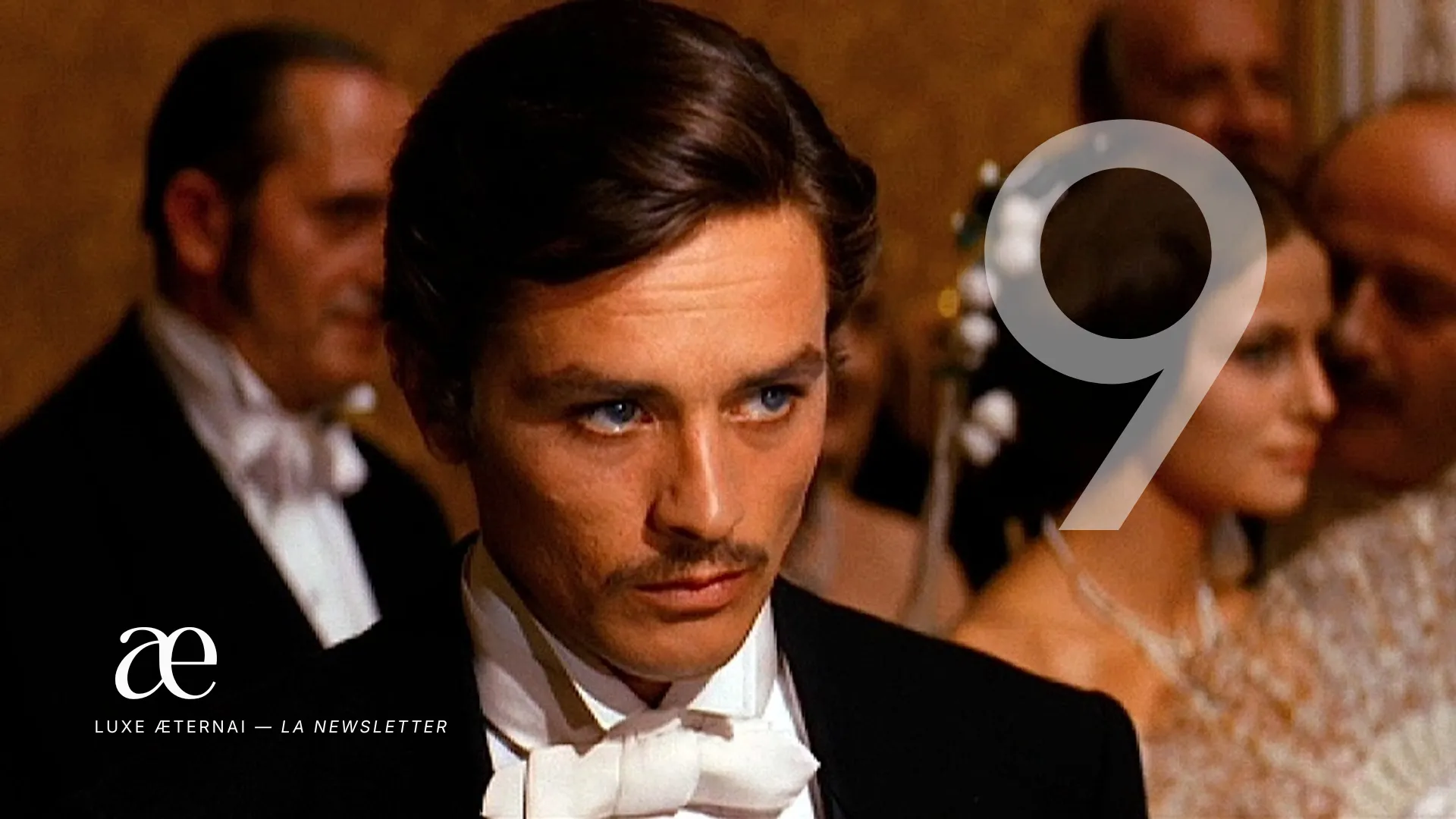
At its core, this is a Sicilian lesson. In The Leopard (1958), Tancredi explains to his uncle, the old Prince of Salina, why he's joining Garibaldi's révolution. One can't help but think of Luchino Visconti's magnificent adaptation — and in the mouth of Alain Delon, Tancredi's words land with startling modernity:
"Se vogliamo che tutto rimanga come è, bisogna che tutto cambi." Tancredi, Il Gattopardo, Giuseppe Tomasi di Lampedusa, 1958
"If we want everything to stay as it is, everything must change." ReconKering is that sentence, transposed to Florence in 2026.
Change everything. So that what is essential doesn't change. That is the entire history of Luxury and Fashion, compressed into an aphorism.
Sources: Kering, CMD Florence, official press release, April 16, 2026; Reuters, April 16, 2026; France-Épargne, April 19, 2026; FashionUnited FR, April 15, 2026; Kering, Accademia per le Eccellenze, April 15, 2026; Kering, Houlès appointment, March 17, 2026; Balenciaga × Intelo.ai, January 21, 2026; Hypebeast FR, April 16; Pause Hardware, April 16; The Gadgeteer, April 17; Journal du Luxe, Pinto Carradine interview, April 14–15, 2026; Google Cloud, interview with Franck Le Moal, CIO LVMH, June 10, 2025; Bain & Company, Luxury & Technology Report 2025; Wansquare, April 15, 2026; Giuseppe Tomasi di Lampedusa, Il Gattopardo, 1958; Henri Focillon, In Praise of Hands, 1934; Marcel Mauss, The Gift, 1925.
MY INDISCREET QUESTION
Bain places the luxury sector's R&D average at 3.1% of revenue (range 1.9–5.5%). De Meo diagnoses 1% at Kering, and comes from an industry where the ratio reaches 10%.
Which of Kering's nine entities will be the first to post an R&D ratio worthy of its CEO's diagnosis? And by when?
The corollary question, which I ask in silence: the press release states that the Client platform aims to "illuminate decisions upstream, from creation to sales planning and operations." From creation. Three words that reach back into the atelier. The real test comes with the next collections, and what the artistic directors will — or will not — allow the platform to touch.
The answer to that question will tell us whether The Platform and the Gesture is a concept Kering has understood, or a trap the group is walking into.
ON MY READING LIST
- Journal du Luxe, interview with Isabelle Pinto Carradine (Inverto/BCG), April 14–15, 2026. The week's essential read on operational AI transformation in luxury. Denser than the Kering CMD press release. Pinto Carradine puts numbers on what ReconKering leaves in the shadows, and gives the concept of Execution Capital its defining voice.
- Kering, Capital Markets Day Florence Replay, April 16, 2026. The official press release doesn't name Pierre Houlès. The video replay and slides should deliver his first public statements since taking the role. It's the missing primary source for verifying whether The Platform and the Gesture is a concept articulated internally, or whether it remains implicit. Priority read before edition #10.
- BoF, "Is AI Antithetical to Luxury?" (Marc Bain, March 25, 2026). The thesis this edition extends and enriches with the Jasper 2026 numbers (91% adoption), the Valentino DeVain backlash, and the empirical silence of Watches & Wonders. Bain asked the question. Four converging sources from this week answer it: no, as long as AI enters through the right door. The Semiotic Tax as operational answer.
- Jasper, State of AI in Marketing 2026 (1,400 marketers, January 2026). The most complete dashboard available on marketing AI adoption. Numbers detailed in WHAT'S MOVING. The regression of proof-of-ROI during the surge in adoption is the most underreported signal in this edition. Read with the Paradox of the Week in mind.
- EU AI Act Article 50, official text + DiscloseKit. Obligations and penalties are detailed in WHAT'S MOVING. DiscloseKit is the practical tool for simulating compliant disclosure formats and auditing an existing production pipeline. For marketing and communications teams that haven't started yet: now.
- Watches & Wonders, 2026 Conference Replays. Maison presentations don't always filter through the mainstream press. The W&W conference replays are the only source that lets you hear whether, in remarks not prepared for external communication, an executive mentions AI. It's the only place where the Semiotic Tax could be put to the test. I'm looking for the exception.
COMING NEXT
Hermès Q1 2026, results expected by end of April. The resilience test for the ultra-luxury segment against structural slowdown in China and geopolitical uncertainty. The question I'll ask when reading the transcript: will Axel Dumas mention operational AI to analysts, or will the discourse stay anchored on craftsmanship and rarity?
Post-CMD Kering analyst notes (Bernstein, JPMorgan, Exane, Kepler). The April 16–17 notes aren't all available yet. They will tell us whether the market missed something in the five pillars of the Group platform, or whether the majority "Reduce" reflects a fair reading of the timeline. A nine-year plan being judged quarter by quarter.
Week 19, study launch: The client, the brand, and the agent: luxury's new ménage à trois? Publication scheduled for April 29. Three actors, three divergent interests, one shared conviction: agentic AI is reconfiguring luxury's rules from the inside. Like De Meo, like Tancredi, even the leopards have to know how to molt. Luxe oblige!